

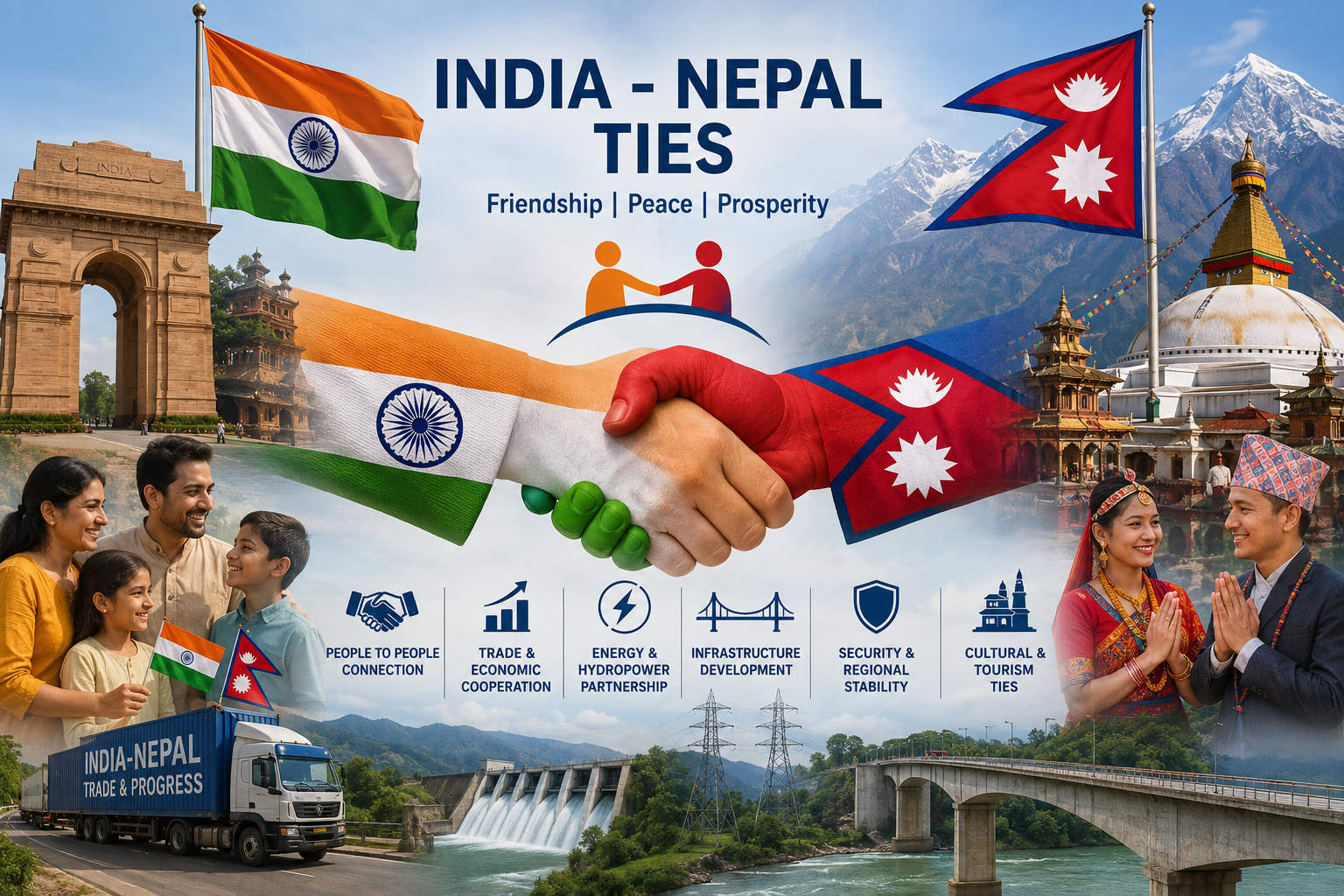
India and Nepal share one of the closest relationships in South Asia, based on centuries-old cultural, social, economic, and geographical connections. The two countries share an open border, strong people-to-people ties, and historical friendship. In recent years, India–Nepal relations have continued to develop through cooperation in trade, infrastructure, energy, security, and cultural exchanges. However, some political and diplomatic challenges have also influenced the relationship.
Historical and Cultural Connections
India and Nepal have deep-rooted cultural relations. The people of both nations share common traditions, languages, religions, and family connections. Hindu and Buddhist heritage plays an important role in connecting the two societies. Important religious sites such as Pashupatinath Temple in Nepal and various pilgrimage centers in India attract millions of visitors every year.
The open border between the two countries allows citizens to travel, work, and live freely in each other’s territories. This unique relationship has created strong social and economic links between communities on both sides.
Economic and Trade Relations
India is Nepal’s largest trading partner and one of the biggest sources of foreign investment. Nepal depends heavily on India for essential goods, fuel supplies, medicines, and access to international markets through Indian ports.
Bilateral trade has expanded over the years, with India supporting Nepal’s economic development through infrastructure projects and financial assistance. Indian companies have invested in sectors such as banking, manufacturing, tourism, and hydropower in Nepal.
Energy Cooperation and Hydropower Development
Energy cooperation has become one of the most important areas of India–Nepal relations. Nepal has significant hydropower potential, and India has been working with Nepal to develop and purchase electricity.
Several agreements have been signed to increase electricity trade between the two countries. Hydropower cooperation can help Nepal generate revenue and help India meet its growing energy needs. Projects related to power transmission lines and renewable energy are expected to strengthen future cooperation.
Political and Diplomatic Relations
India and Nepal maintain regular diplomatic communication through high-level visits and bilateral meetings. Both countries cooperate on issues related to regional stability, disaster management, and security.
However, political differences have occasionally created tensions. Issues such as border disputes, especially regarding areas like Kalapani, Lipulekh, and Limpiyadhura, have affected public opinion and diplomatic discussions. Both nations continue to emphasize dialogue and peaceful resolution of disagreements.
Security Cooperation
Due to their open border, India and Nepal share common security concerns, including preventing illegal activities, human trafficking, and cross-border crimes. The two countries’ security forces cooperate through regular communication and joint efforts.
Nepal also has a significant number of citizens working in India, while many Nepali citizens serve in the Indian Army through the historic Gurkha recruitment system, representing another important link between the two nations.
Challenges and Future Prospects
Although India and Nepal enjoy strong relations, challenges remain. Political changes in Nepal, differences over certain agreements, and competition for influence in Nepal involving other countries have created complexities.
The future of India–Nepal relations depends on mutual respect, better communication, and cooperation in areas such as technology, tourism, climate change, and infrastructure development.
Conclusion
India–Nepal relations are built on a unique foundation of history, culture, and friendship. Despite occasional disagreements, both countries recognize the importance of maintaining strong ties. By focusing on cooperation and addressing challenges through dialogue, India and Nepal can continue to strengthen their partnership and contribute to peace and development in South Asia.

