

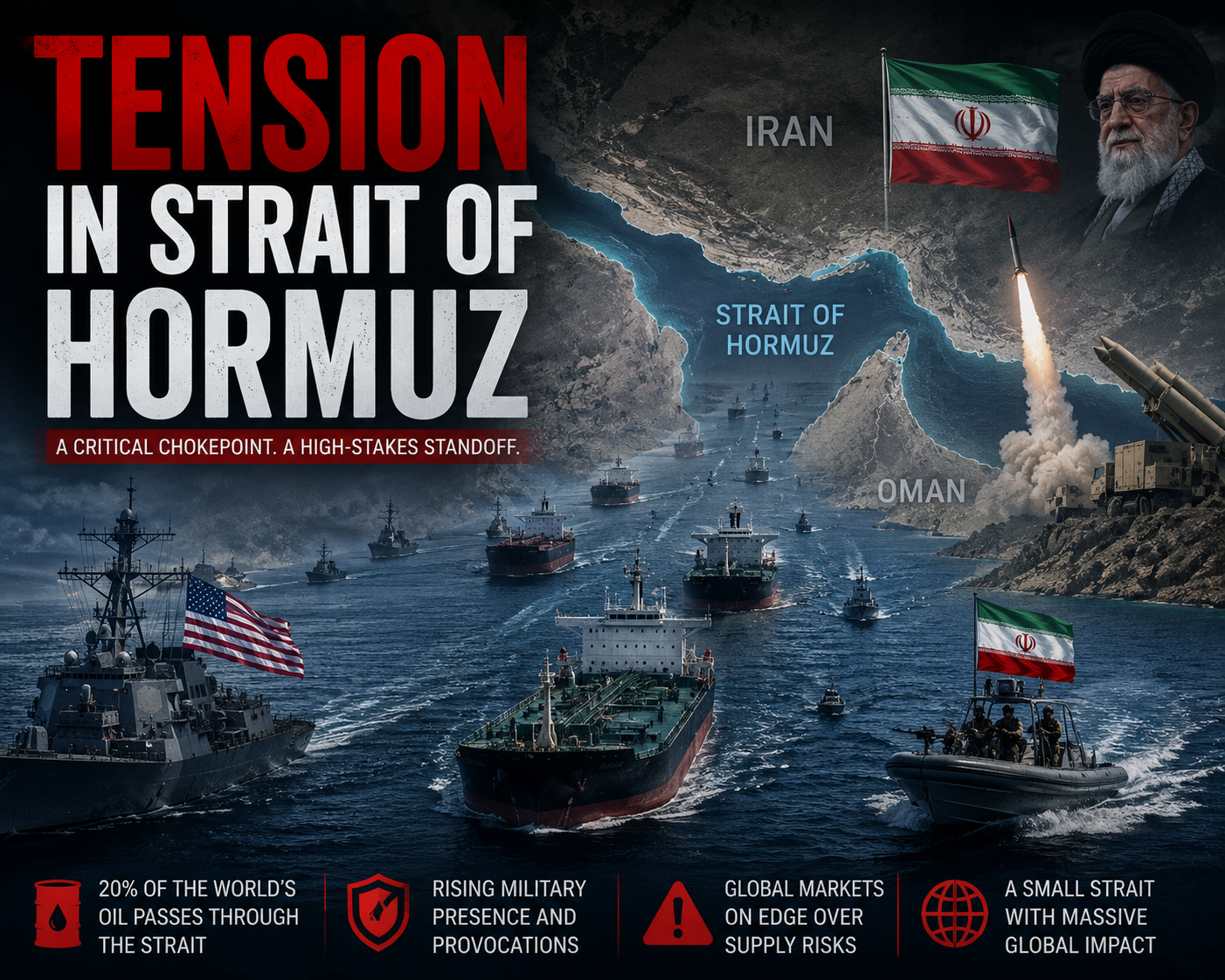
The Strait of Hormuz, one of the world’s most strategically important maritime chokepoints, has once again become the center of a major geopolitical crisis. Escalating tensions between the United States and Iran have intensified military activity in the region, disrupting commercial shipping and raising concerns about global energy security. Recent incidents have also resulted in the tragic deaths of Indian seafarers, drawing international attention and diplomatic protests from New Delhi.
The current confrontation stems from the broader conflict between Washington and Tehran, including a U.S.-led naval blockade targeting vessels suspected of transporting Iranian oil. The United States argues that these measures are necessary to enforce sanctions and prevent Iran from financing military operations. Iran, however, has condemned the actions as unlawful and has accused Washington of destabilizing the region.
A particularly controversial incident occurred near the coast of Oman, close to the Strait of Hormuz, when a U.S. military strike hit the tanker MT Settebello. The attack resulted in the deaths of three Indian sailors and injuries to others aboard the vessel. According to U.S. Central Command, the tanker was allegedly attempting to violate the blockade and failed to comply with warnings. The vessel’s operators have disputed that account and called for an independent international investigation.
India responded strongly to the deaths of its citizens. The Ministry of External Affairs summoned senior U.S. diplomats and demanded explanations regarding the use of force against civilian-crewed vessels. Indian officials emphasized that the safety of seafarers must remain a priority regardless of geopolitical disputes and urged all parties to pursue diplomacy rather than military escalation.
The crisis has highlighted the vulnerability of thousands of Indian sailors working aboard international merchant vessels in the Gulf region. India is one of the world’s largest suppliers of maritime personnel, and any disruption in the Strait of Hormuz directly affects Indian citizens and global shipping operations.
Meanwhile, diplomatic efforts to reduce tensions continue. Reports indicate that negotiations involving regional mediators are underway, though significant differences remain between Washington and Tehran. The future of maritime security in the Strait of Hormuz remains uncertain, and the possibility of further incidents continues to worry governments, shipping companies, and energy markets worldwide.
As the crisis unfolds, the deaths of the Indian sailors serve as a stark reminder of the human cost of geopolitical conflict. Beyond military strategies and diplomatic disputes, ordinary civilians working at sea often find themselves caught in the crossfire of international confrontations. Their loss has become a symbol of the urgent need for restraint, dialogue, and a peaceful resolution to one of the world’s most dangerous flashpoints.

